On forgetting the things that mattered
The shape of a year
A year passes and its shape is gone. You know you did things — important things, meaningful things — but when someone asks you to name them, fewer come to mind than you would expect.
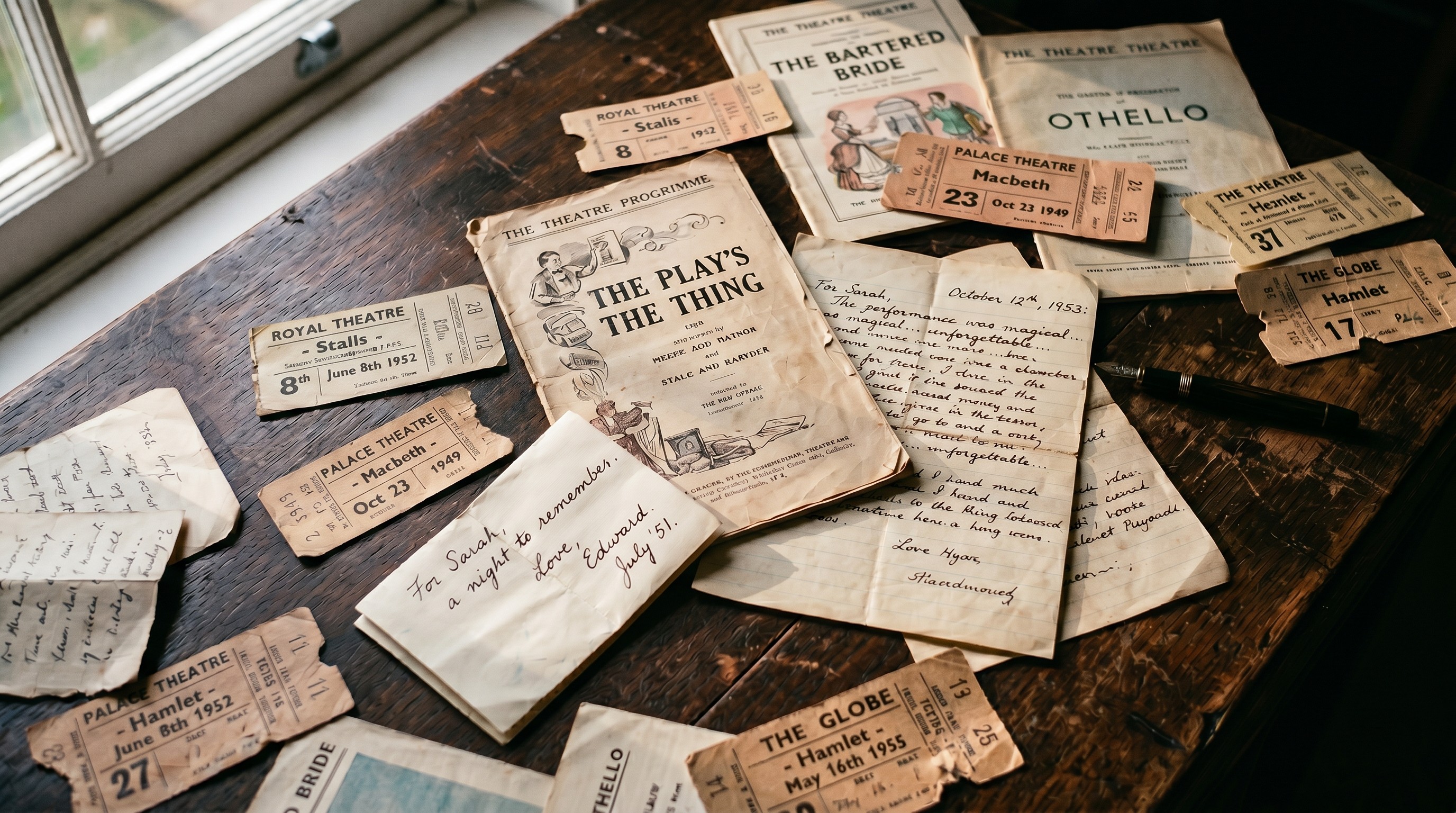
The play that moved you in February. The book you finished on holiday. The meal with friends that became the story you keep telling. They were vivid once. Now they are outlines.
This is not the forgetting of age or illness. It is the forgetting of a life lived too quickly to hold onto.
Try it now. Think back twelve months. How many experiences can you name — not vaguely, but with the title, the date, who you were with, what you thought walking out? Most people reach five or six before the details start to blur. A year that felt full returns a handful of fragments.
Why experiences slip
The science of memory is clear on this: we remember what we attend to. The act of reflection — pausing to consider what just happened, what it meant, how it made you feel — is what moves an experience from short-term awareness into lasting memory.
But modern life offers no natural pause. One experience follows another before the previous one has been given space to settle. The concert ends, the phone comes out, the next thing begins. Thursday's play is displaced by Friday's dinner, which gives way to Saturday's exhibition, and by Monday all three have flattened into a general sense that the weekend was good.
The problem is not capacity. We are capable of remembering far more than we do. The problem is that nothing in the rhythm of contemporary life asks us to stop and hold on. There is no prompt, no ritual, no place where the act of remembering is built into the flow.
The problem is not that we experience too little. It is that we have nowhere for what we experience to land.
The cost of not holding on
When experiences fade, we lose more than facts. We lose the thread of our own lives.
It becomes harder to share what mattered. Someone asks about a book and you remember liking it but not why. A friend wants a restaurant recommendation and you cannot recall the name of the place that moved you six months ago. You know a particular year was significant — full of change, full of discovery — but you could not reconstruct its shape if you tried.
There is a subtler cost too. The patterns of a life — what you are drawn to, what moves you, how your tastes have shifted over the years — only become visible when you can look back across time. Without a record, each experience stands alone. With one, they start to form something larger. A narrative. Yours.
What we have tried
We have tried photographs. Most of us carry an archive of thousands — concerts and dinners and performances captured in the moment, almost never looked at again. The photograph preserves the image but not the context. Not the name of the play. Not the thought you had walking home. Not who recommended it or what you would tell someone about it now. A grid of thumbnails is not a memory. It is evidence that something happened.
We have tried notes apps. Fragments scattered across tools, untagged, unsearchable, orphaned from any context that would make them useful later. A note that says "good — recommend" with no indication of what it refers to. A title saved in one app, a photograph in another, a half-formed thought in a third. The scattering is not a failure of discipline. It is the natural result of using tools that were not designed for this.
We have tried social media. But posting publicly is not the same as remembering. It is performance — shaped for an audience, curated for reaction. The experience gets translated into what is shareable rather than what was true. It serves everyone else's attention before it serves your own memory.
None of these were built for this. They were built for other jobs, and we pressed them into service because nothing better existed.
What holding on looks like
What if there were a single place — quiet, considered, entirely yours — where you could capture the experiences worth keeping? Not everything. Just the things that mattered.
A rating, a note, a photograph. The details that would otherwise disappear — the venue, the date, the company, the poster, what the critics thought — gathered alongside your own record. Not scattered across four apps. Not shaped for someone else's feed. Just yours, in one place, for as long as you want it.
You could look back by month and see what February held. By city and see what London meant to you that year. By category and notice when you stopped reading and started going to the theatre more. The shape of a year, recoverable.
That is what we are building with Impryntd. Not a journal for every passing thought. Not a social network competing for your attention. A home for the experiences worth keeping — because the rest of your cultural life deserves the same consideration that Letterboxd gave film.
If that sounds like something you have been looking for, join the waitlist.
Impryntd is in pre-launch.
Join the waitlist and be among the first to start imprinting.
Start imprinting