Why we need a Letterboxd for everything
What Letterboxd got right
Letterboxd understood something that most apps miss: the experience of watching a film does not end when the credits roll. It continues in the reflection, the conversation, the quiet moment when you decide what it meant to you.
By giving people a beautiful, considered place to capture that reflection — a rating, a few words, a date — Letterboxd turned passive consumption into active engagement. Film became something people attended to. Not just watched, but held.
The result is a community of millions who remember what they watched, when they watched it, and how it made them feel. Not because they were forced to. Because the tool made it natural.
There is something else Letterboxd got right that is easy to overlook: it made the act of recording feel good. Opening the app after a film is not a chore. It is part of the experience itself. The interface respects the moment. It asks just enough — a star rating, a line or two, a date — without turning reflection into homework. That lightness is what makes the habit stick.
The gap for everything else
But film is one category. What about the rest of a cultural life?
The play that moved you. The book that changed how you think. The meal that became the story you keep telling. The lecture that reframed something you had taken for granted. The exhibition that held your attention for two hours when you expected to leave after thirty minutes.
These experiences have no Letterboxd. No single, considered home. They scatter across notes apps and camera rolls and social feeds, losing context and meaning with every passing week.
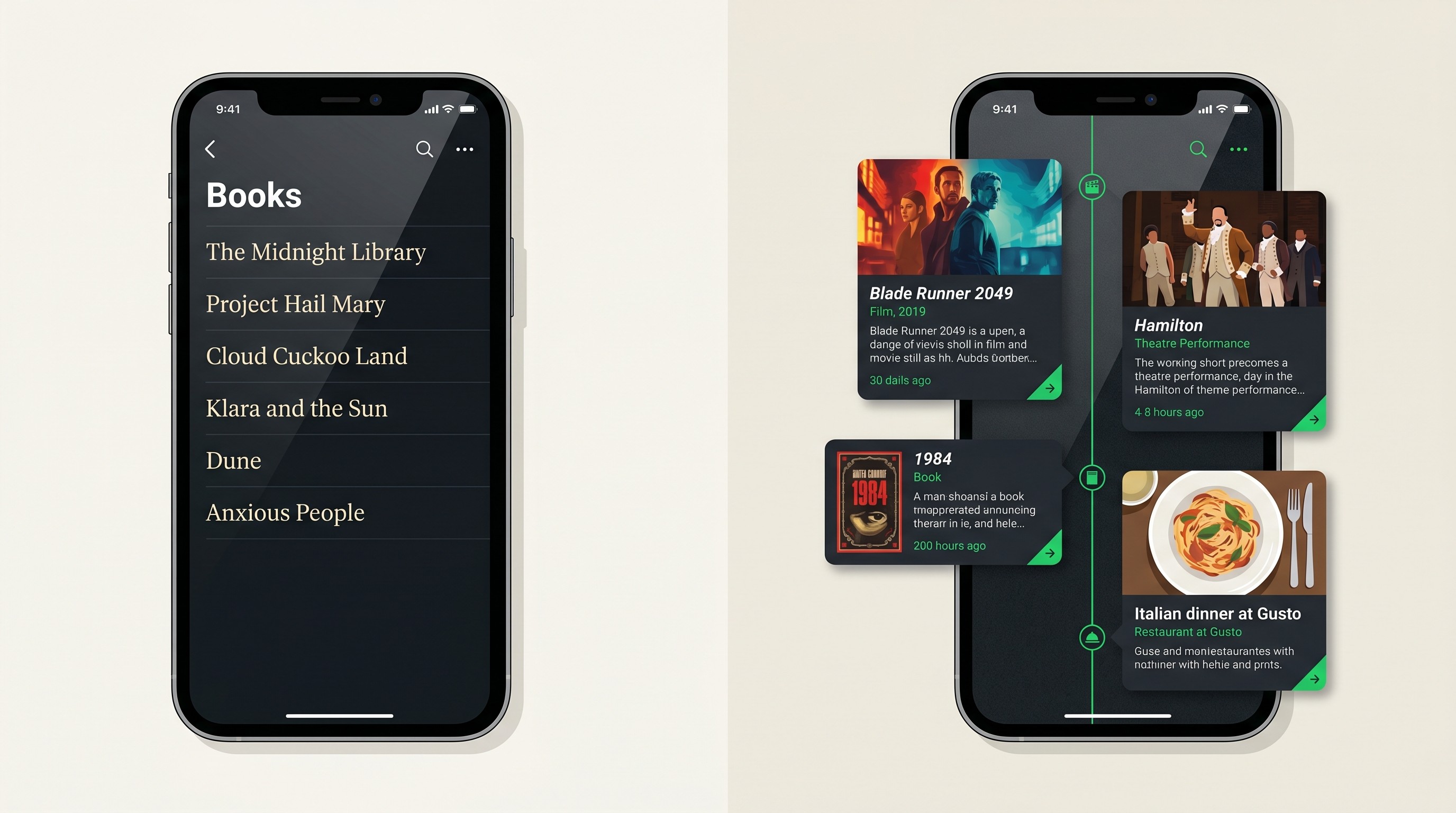
Some categories have partial solutions. Goodreads exists for books, but it is built around a catalogue and a social feed, not a personal record. Untappd tracks beer. Vivino tracks wine. Each serves its niche. None of them speak to each other, and none of them are built around the idea that what you experience across categories is more interesting than what you experience within any single one.
The result is that most meaningful experiences — the ones that are not films — go unrecorded entirely. Not because people do not care, but because there is nowhere natural for them to go.
Why cross-category matters
The most interesting patterns in a cultural life are the ones that cross categories.
The book that led you to the play. The meal that happened after the concert. The city you visited where everything — the gallery, the restaurant, the evening walk — belonged together somehow. The year you saw more live performance than film and did not realise it until you looked back.
A single-category tool cannot surface these patterns. It sees one dimension of a life that is lived across many. Each app holds a slice. None holds the whole.
There is a practical argument too. Nobody wants six apps for six categories. The friction of deciding where something belongs, of maintaining separate accounts and separate recording habits, is enough to ensure that most experiences simply go unrecorded. One place, one habit, one record. That is what makes the difference between capturing something and letting it pass.
Recording vs. remembering
There is a difference between tracking what you consumed and remembering what you experienced. A checklist tells you what happened. A companion helps you understand what it meant.
Letterboxd lives on this distinction. The four-star rating and the two-sentence review are not data — they are a small act of attention. They ask you to pause, consider, and decide. That pause is what turns a film from something you watched into something you remember.
Any tool that extends this idea across categories needs to respect the same principle. It cannot feel like a database. It cannot feel like admin. It has to feel like the natural close of an experience — the moment you sit down and give what just happened a place to live.
What this would look like
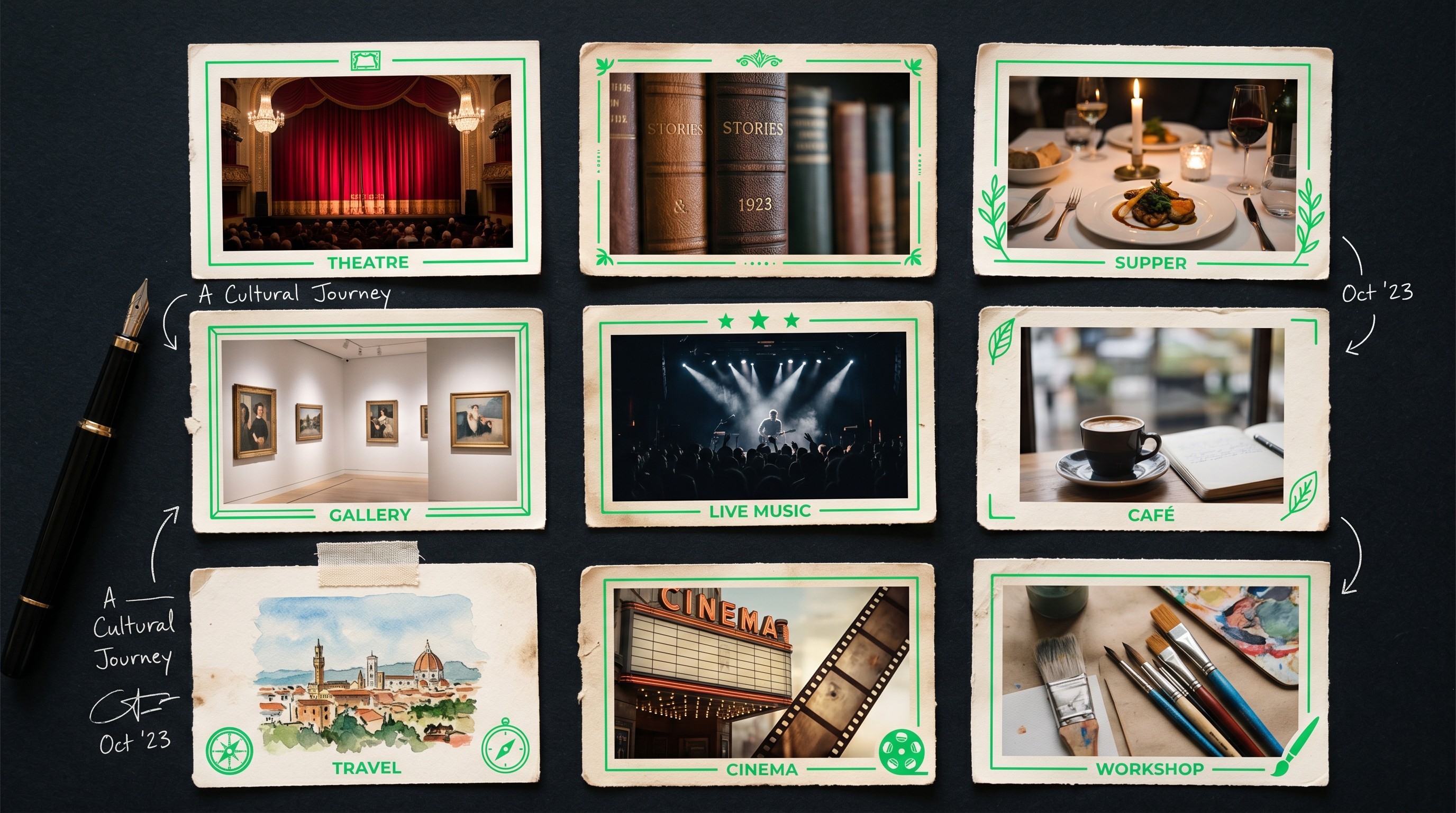
Imagine a single place where every meaningful experience — across theatre, film, books, meals, music, talks, travel, and more — could live side by side. Where you could look back on a month and see its full texture: the book you were reading alongside the play you saw and the dinner that followed.
Not a social feed. Not a checklist of consumption. Not a daily diary of moods and meals. A quiet, considered record of the things worth keeping. Private by default. Shareable with the people you trust. Yours.
That is the idea behind Impryntd. We are building the experience companion that Letterboxd proved people want — extended beyond film to every category of experience that shapes who you are.
If that resonates, join the waitlist.
Impryntd is in pre-launch.
Join the waitlist and be among the first to start imprinting.
Start imprinting